

EXPLORE.PERSIST.MASTER.
CCIE Wireless Certification and Training.
Share :
+971 43346660
CCIE Enterprise Wireless Certification is one of Cisco’s highest and most prestigious expert-level certifications, recognized worldwide as a benchmark for excellence in enterprise wireless networking. A CCIE Wireless certified professional demonstrates advanced knowledge and hands-on expertise in designing, deploying, operating, optimizing, and troubleshooting complex wireless infrastructures. The certification validates skills in enterprise WLAN architecture, RF design, Cisco Catalyst Wireless Controllers and Access Points, wireless security, mobility, automation, network assurance, and Cisco Identity Services Engine (ISE), preparing professionals to manage large-scale, mission-critical wireless environments.
The quality of the certification program, its rigorous hands-on examination, and its alignment with modern enterprise networking requirements make CCIE Wireless one of the industry’s most respected credentials. At IPRULERS, training is delivered by experienced CCIE-certified instructors using enterprise-grade Cisco equipment in a practical, hands-on learning environment. Students benefit from instructor-led classroom sessions, live online training, one-to-one mentoring, flexible weekday and weekend schedules, and extensive lab practice designed to build real-world implementation and troubleshooting skills.
At IPRULERS, our training program is designed in accordance with the latest Cisco certification blueprint, combining expert mentorship, real-world enterprise lab scenarios, and structured exam preparation to equip candidates with the confidence and practical experience needed to successfully achieve the CCIE Wireless certification.
Target Audience
- Network engineers preparing for the Implementing Cisco Wireless Network Core Technologies (350-101 WLCOR v1.0) examination.
- Wireless network engineers with five to seven years of professional experience in designing, deploying, operating, optimizing, and troubleshooting enterprise wireless networks.
- Wireless network designers and architects responsible for planning, implementing, and supporting complex Cisco wireless infrastructures.
- Network engineers who utilize expert-level troubleshooting and analytical methodologies to resolve complex wireless networking challenges and optimize enterprise wireless deployments.
- IT students and professionals seeking advanced expertise in enterprise wireless technologies and an internationally recognized Cisco expert-level certification to advance their careers.
- Professionals aspiring to the following roles:
- Wireless Network Engineer
- Wireless Network Architect
- Enterprise Network Engineer
- Network Consultant
- Technical Solutions Architect
- Network Operations Manager
- Cisco Partners and System Integrators
Prerequisites
The CCIE Wireless training program does not require any mandatory prerequisites for attending the course. However, candidates should possess a solid understanding of enterprise networking fundamentals, Cisco wireless technologies, RF principles, wireless security, mobility, and network automation before attempting the certification examination
- Qualify for elite job roles in the rapidly evolving field of enterprise wireless networking.
- Gain industry-level knowledge and practical experience in designing, deploying, operating, optimizing, and troubleshooting Cisco enterprise wireless solutions.
- Develop the ability to analyze customer requirements and deliver secure, scalable, and high-performance wireless network solutions.
- Enhance career opportunities with globally recognized Cisco expert-level credentials, competitive salaries, and accelerated professional growth.
- Master every phase of the enterprise wireless network lifecycle—from planning and RF design to implementation, operations, optimization, and advanced troubleshooting.
- Build essential expertise in wireless automation, programmability, security, and network assurance to meet the demands of modern enterprise environments.
- Earn the Specialist Certification upon successfully clearing the qualifying written examination.
- Showcase your achievement by linking your Cisco digital certification badge to professional and social networking platforms.
Duration
120
Skill Level
Expert
Certificate
Yes
Modules
5
Language
English
Mode
Online/Offline
Key Highlights
- Live Instructor-Led Training
- 120 Hours of Technology Lectures
- 40 Hours of Lab Preparation
- Weekdays (Tue - Fri)
- Weekend (Fri-Sat or Sat-Sun)
- Boot Camp Training for a Fast Track Learning
- Written Question Bank to Clear WLCOR
- Eve-ng Set up on the laptop with images
- A workbook intended for the technology lectures
Key Highlights
- Hands-on Lab Practice
- Most Updated and Passable Workbook
- Unlimited Real Rack Access Until you pass or a Version Change
- Support Until you pass or a Version Change
- Detailed Explanation of the Real Lab Solution by the Expert
- Individual Attention given once the real lab preparation started
- 24/7 Access to the Learning Resources
- Flexible Installment Plans
- Instructor support is readily accessible via Email & Whatsapp
Course Curriculam
1.1 IEEE 802.11 standards and protocols
1.2 Indoor and outdoor RF deployments
- Coverage
- High Density / Very
- High Density
- Location
- Throughput and Capacity
- Voice
1.3 RF Design / Site survey
- Define the tasks/goals for a preliminary site survey
- Conduct a site survey
- Determine AP quantity, antennas and placement
1.4 RF management and optimization
- Channel use (Co-channel, radar, non-Wi-Fi interference, Dynamic Bandwidth Selection)
- Catalyst CleanAir, CleanAir Pro and Event Driven Radio
- Resource Management (EDRRM)
- Data rates
- Power level
- Radio Resource Management (manual, auto, A1-Enhanced RRM)
- RF profiles
- RX-SOP
2.1 AP power source options
2.2 Layer 2 technologies to support wireless deployments
- CDP, LLDP
- Dual uplink and mGig
- EtherChannel
- STP
- VLANs
2.3 Data/Control plane technologies to support a SD-Access wireless deployment
- VRFs
- VXLAN and LISP
2.4 IPv4 and IPv6 connectivity
- Static and inter-VLAN routing
- Subnetting
2.5 Multicast on the switching infrastructure
- Basic IGMP (including IGMP snooping)
- MLD
- PIM
2.6 QoS with Modular QoS Command-Line Interface (MQC)
2.7 Services to support a wireless deployment
- DHCPv4 / DHCPv6
- DNS
- NTP, SNTP
- SNMP
- SYSLOG
3.1 Access Points
- AP Auto Locate
- AP CLI troubleshooting
- Meraki Local Status Page (LSP) troubleshooting
- AP country and regulatory domain
- AP join profile
- AP level configuration settings
- AP logging
- AP modes
- Catalyst WGB on COS APs
- AP monitoring
- Dual-Mode and Global Use Access Points (GUAP)
- Power profiles, Power optimization
- VLAN tagging
- WLC discovery and AP join process
3.2 Wireless deployment models
- On-prem
- Cloud
3.3 Catalyst Wireless LAN Controller L2 & L3 functionality
- Interfaces and ports
- Routing and NAT
3.4 Wireless mobility
- L2/L3 roaming, including Meraki Distributed L3 Roaming (DL3R)
- Catalyst Mobility anchoring, encryption, group scaling, optimization
- Campus Gateway
3.5 Catalyst FlexConnect
3.6 Catalyst High availability, redundancy, and resiliency
- ISSU
- N+1, N+N
- Patching and rolling upgrades for IOS-XE
- SSO
3.7 URWB and Mesh
3.8 Catalyst wireless AP grouping through profiles and tags
3.9 Meraki data plane modes (bridge, mesh, repeater, tunnel)
4.1 Access Point switchport authentication
- 802.1X
- IOS-XE interface templates
- IOS-XE port autoconfig
- MAB
4.2 Guest management
- Basic sponsor policy
- Captive portals
- Central web authentication
- Local web authentication
4.3 Identity management
- Basic PKI for dotlX and WebAuth
- Identity PSK
- Internal and external identity sources
- Wi-Fi Personal Network (UDN/WPN)
4.4 Intrusion detection and prevention features
- Client exclusion policies
- Rogue policies
- Standards and custom signatures
4.5 Secure management access, control plane and cloud dashboard
- AP authorization
- Catalyst control plane ACLs
- Device administration with TACACS+/RADIUS
- Management via wireless
- Password policies
- Deployments with a proxy server
- Meraki dashboard access and security
4.6 Cisco Group-Based Policy for wireless networks (Cisco TrustSec and Meraki Adaptive Policy)
- Classification
- Propagation
- Policy enforcement
4.7 Wireless security and network access policies
- ACLs
- Certificates / Trustpoint management
- Client authentication and authorization
- Client profiling and provisioning
- CoA
- Local policies
- L2/L3 security
- OpenRoaming and Hotspot 2.0
- RADIUS attributes
- Umbrella integration / Threat defense
- Meraki MR firewall
- Meraki pre-configured network policies
5.1 AVC and Netflow
5.2 Client roaming optimization
- 802.11k/v
- 802.11r and Adaptive Fast Transition
- Band Select
- Load Balancing
5.3 mDNS
- mDNS gateway and proxy
- Service discovery
- Service filtering
5.4 QoS policies
- Admission control
- Bi-Directional Rate Limiting
- EDCA
- FastLane, FastLane+
- Catalyst QoS profiles and maps
- WMM
- Meraki QoS and traffic shaping
5.5 Wireless Multicast
- Multicast/Broadcast suppression and control
- Multicast direct
- Multicast modes in the Catalyst WLC
- Multicast snooping
- Catalyst Multicast VLAN
6.1 Wireless Programmability
- API calls
- Data models
- EEM scripts
- Telemetry
6.2 Cisco Catalyst Center
- API calls using python scripts
- AI Analytics
- Assurance
- SD Access Wireless
- Wireless Automation
6.3 Cisco Spaces
- API calls using python scripts
- Management access
- Network services
- Operational Insights
6.4 Cisco Merakis
- Network assurance, service health
- Intelligent capture
lab infrastructure.
IPRulers has a fully equipped lab, specially designed for the CCIE Wireless
training, with an enhanced lab topology that represent real world network. Students will
have the following equipment and software configured for their training; they may also get
the chance to see newer hardware and software during this period.

CCIE Wireless equipment and software list:

The practical exam tests candidates on solutions that can be configured using the below
Equipment and software versions. Candidates may see more recent software versions
during their attempt but will only be tested on features that are supported in the list below.
Passing the exam requires a depth of understanding difficult to obtain without hands-on
experience. Early in your preparation you should arrange access to equipment and soft-
ware similar to that used on the exam.
Virtual machines
- Cisco Catalyst Center – 2.3.x
- Cisco Identity Services Engine (Cisco ISE) – 3.4.x
- Windows Server (no candidate configuration required)
- Wireless clients (Linux/Windows 11) with Cisco Secure Client

Physical Equipment
- Cisco Catalyst Wireless 9100 Series
- Cisco Catalyst 9800 Series Wireless Controllers
- Cisco Campus Gateway
- Cisco Embedded Wireless Controller (EWC) on Catalyst Switches (SD-Access)
- Cisco Catalyst 9300 Series
- Cisco Catalyst 9200 Series
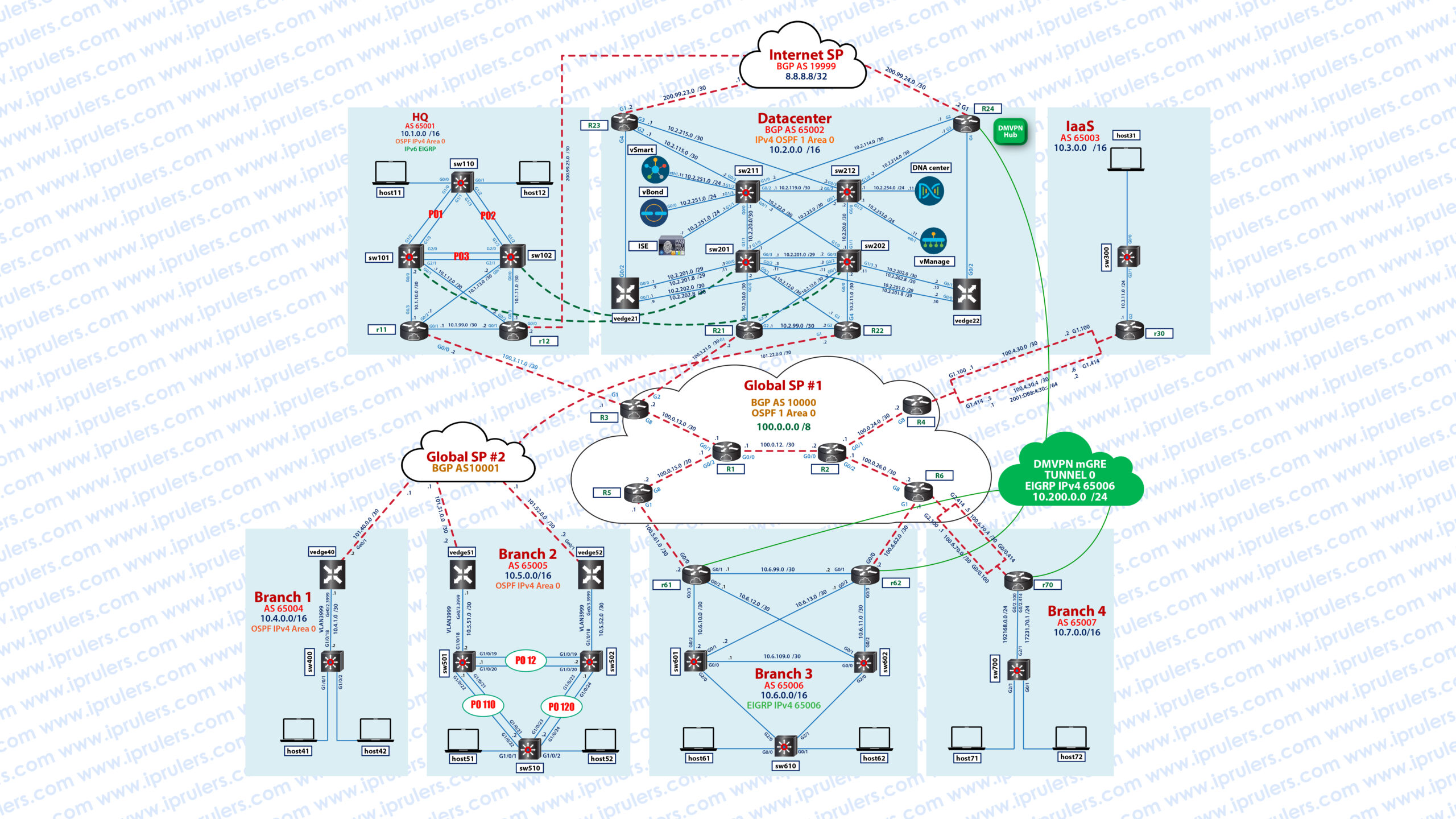
Topology
IP Rulers has a fully equipped lab, specially designed for the CCIE Wireless
training, with an enhanced lab topology that represent real world network. Students will
have the following equipment and software configured for their training; they may also get
the chance to see newer hardware and software during this period.

Modes Of Training
We provide various modes of training, each catering to different learning styles, preferences, and needs.You can make your choice of training mode.
- Classroom-Based Training
- One-On-One Training
- Online Training
- Corporate Training
- Fast Track Training
- Private Group Training
- Lab Workshop Training
Instructors

gigi vikraman
MD & Founder
4XCCIE (R&S, Security, Collaboration, DC), PCNSE & NSE7
Gigi Vikraman a quadruple CCIE has over 15 years of experience working in the Cisco networking field consulting and training. In addition, he has designed, implemented and supported numerous enterprise networks. He has been a dedicated CCIE instructor for over 10 years. He has extended his service in producing 400+ CCIE’s all over the world. Apart from all these, he has already proven his well knowledge in giving training on Fortinet, Palo Alto and Check Point.
2xCCIE (EI, Security), Microsoft, Amazon Web Services, CompTIA, Python
Amal Raj is a CCIE-certified professional in Enterprise Infrastructure and Security with over 5 years of experience in consulting and training IT professionals in advanced networking and cybersecurity technologies. In addition to Cisco technologies, Amal possesses strong working knowledge of Microsoft and Amazon cloud platforms, enabling him to deliver comprehensive training across modern enterprise networking, security, and cloud environments

Amal Raj
Senior Technical Instructor